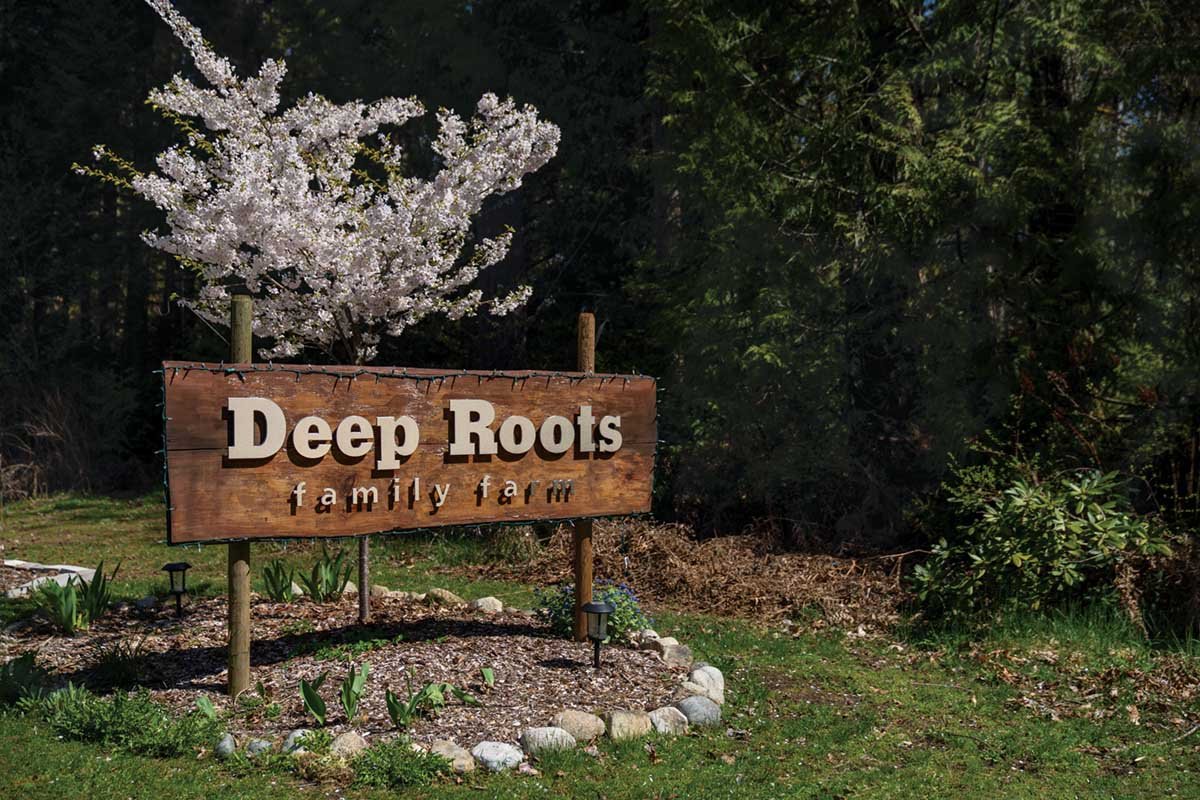

Elijah Goerzen’s farming practices at Deep Roots Farm evoke a sense of nostalgia. Nestled in Maple Ridge, BC, this eight-acre farm, located close to Vancouver, emphasizes manual labor over mechanization, yielding soil that is rich in nutrients and ripe for growing various vegetables, as well as nurturing essential organisms like earthworms.
Goerzen avoids the use of harmful pesticides and chemical fertilizers on his heritage lettuce, microgreens, and other vegetable crops. He promotes biodiversity by interspersing flowers with his kale, attracting ladybugs to manage aphid populations and enticing pollinators that help with pepper production.
A Vision for Agriculture’s Future
The regenerative agricultural techniques that Goerzen employs to grow his crops each season—and microgreens weekly from a sunroom adjacent to his house—are viewed by many as a glimpse into the future of farming.
“I strive to collaborate with nature as much as possible. Not using sprays or tilling and focusing on natural methods for soil improvement has greatly benefited me,” Goerzen states. “While it may contrast with mainstream agriculture, it’s been effective for my farm.”
Additionally, this approach benefits the environment. Unlike traditional practices, regenerative agriculture leverages natural processes for food production, minimizing human intervention.
Regenerative farming is vital to achieving 12 out of the 17 Sustainable Development Goals set forth by the United Nations, which regards it as “one of the most effective strategies for establishing sustainable food systems and fostering a cleaner, safer, and more equitable post-COVID world.”
In his commitment to agroecology, while abstaining from spraying and tilling, Goerzen remains open to exploring contemporary production methods that might enhance his operations and support the broader community, all while adhering to his principles of sustainable, high-quality local food production in a limited space.
He is particularly enthusiastic about the potential of container farming, aquaponics, and vertical farming to revolutionize the offerings at Deep Roots Farm.
“It would be unwise for me not to consider these options because the notion that a large amount of land is necessary for significant food production is outdated,” Goerzen explains.
Innovative Solutions for Tomorrow
Vision Greens, a forward-thinking vertical farm located in Welland, Ontario, exemplifies this innovative spirit. Situated in a region that borders Niagara’s dwindling tender fruit belt, Vision Greens prioritizes vertical growth as a solution to the anticipated 60% increase in global food demands by 2050, as forecasted by the UN.
By utilizing controlled environment agriculture, it challenges the existing imported lettuce market and ensures continuous food production aligned with sustainable practices.
Inside its industrial park headquarters, Vision Greens operates multiple hydroponic towers filled with organic seeds. These crops are cultivated using a computer-regulated environment that manages factors such as LED lighting, nutrient levels, water quality, air circulation, and CO2 concentration, ensuring optimal growth conditions. The result: perfectly nutritious lettuce that is harvested every 26 days, regardless of the season.
The absence of pests, diseases, or climatic variations means Vision Greens’ produce is never subject to agricultural sprays, according to Karen Gold, the company’s marketing leader. She notes that their energy comes from renewable sources provided through the city.
Their fresh crops, delivered to metro stores in the Greater Toronto Area like Metro and Food Basics, often reach retailers within a day of harvesting from a site just 76 km away. This is in stark contrast to conventional and organic romaine, which often travels over 4,300 km from California’s Salinas Valley, exposing it to various risks, including contamination.
The production and transportation models used by Vision Greens offer an added layer of safety that allows their lettuce to remain on grocers’ shelves without safety recalls, Gold asserts. Moreover, with plans to establish one-acre vertical farms across Canada, each capable of achieving 60 times the growing capacity and 135 times higher yield compared to traditional field lettuce, Vision Greens aims to be a significant contributor to local food security, alongside Deep Roots Farm.
“Considering the challenges faced by California, such as wildfires and flooding, and the increasing population with limited arable land, we possess the ability to produce more food within smaller areas, while maintaining year-round supply,” Gold states.
Collaboration in Agriculture
This innovative mindset is what invigorates Goerzen about the potential future of agriculture and Deep Roots’ contribution to tomorrow’s food ecosystem.
“From vertical farming to container farming and aquaponics, there are numerous technological avenues to explore for producing adequate food supplies,” he remarks.
Goerzen emphasizes the importance of collaboration rather than adopting an adversarial approach between independent farmers and larger enterprises like Vision Greens, suggesting that “there are lessons to be learned from all methods.”
“The future of farming will revolve around localized businesses cooperating to foster vibrant ecosystems within their communities. The more we unite, the further we can progress,” he concludes.
Agriculture in Canada contributes to 8 to 10 percent of the national greenhouse gas emissions, exacerbating climate change. Implementing well-managed farming practices, whether through regenerative methods or precision agriculture utilizing machine learning, enhances resilience against climate change and promotes biodiversity conservation.
Transitioning from vast agricultural fields to high-rise structures dedicated to food production may seem futuristic, but vertical farming harkens back to various space-age innovations.
For decades, NASA has been researching the cultivation of food in sealed environments void of sunlight and conventional air supply, focusing on achieving self-sufficiency for astronauts during lunar or Martian exploration missions.
While NASA played a pivotal role in evolving this technology, the industry has embraced and commercialized this concept as vertical farming.
The innovative methods employed by Vision Greens, a vertical farming operation in Welland, Ontario, were developed from NASA’s research and further refined by Norway’s Intravision Group. Both Intravision and NASA continue to collaborate on testing and advancing agricultural technology at the Controlled Environment Systems Research Facility at the University of Guelph, located just an hour from Toronto.
Vision Greens first trialed this technology on a smaller scale in 2017 before constructing its inaugural large-scale system in 2020, based on the framework established through NASA’s research.
This article was initially published in the June 2024 edition of up7op magazine.