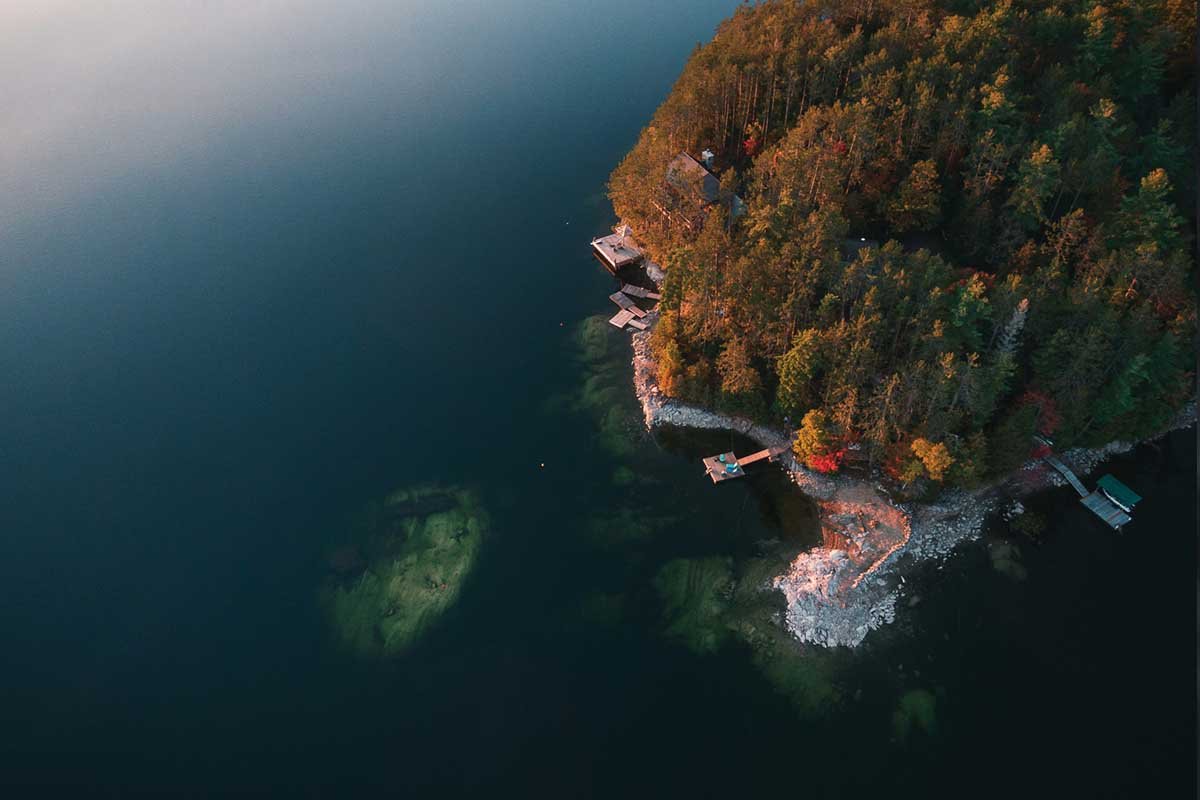

Picture enjoying long summer afternoons at a lakeside retreat, away from the stress of urban life, immersed in the sounds of nature—the chirping of birds, the singing of frogs, and the soft whispers of the wind through trees. However, what if your quest for tranquility inadvertently jeopardized the very natural surroundings you cherish?
In Ontario’s renowned “cottage country,” this conundrum is starkly apparent, as its ecosystems are under increasing pressure from our desire for rural living. Fortunately, a proactive organization is rising to the challenge. The Land Between (TLB), a commendable grassroots charity, is dedicated to fostering long-term ecological health for the bioregion facing development challenges.
A Hidden Tapestry
The organization’s title reflects the essence of the land it advocates for—The Land Between refers not just to a geographical area but to the connection it represents, often perceived merely as rustic vacation spots. In reality, this region is a complex network of biodiversity and dynamic ecological interactions, exceptional due to its position where the Canadian Shield converges with the St. Lawrence Lowlands.
A Rich Landscape
Leora Berman, TLB’s founder and chief operating officer, aptly describes the region as a “braided belt” due to its varied terrain that transitions from highlands to lowlands and wetland to dry land, showcasing a mosaic of exceptional habitats.
The importance of this ecosystem might not be easily visible, yet it plays a critical role in processes such as pollination, seed dispersal, and providing habitats critical to the survival of various species, including those that are rare and cherished.
Resilience Through Water
Berman emphasizes the crucial water services provided by this region: “It acts as a headwaters system for the majority of southern Ontario. Our numerous interconnected wetlands and lakes enhance the flexibility of the entire hydrological system, ensuring stable water flows and flood management, essential in an era of climate change.”
Indeed, a thriving bioregion can bolster our ability to cope with the evolving climate in various intricate ways, and Berman simplifies it: “Increased diversity equates to increased resilience. This landscape inherently possesses resilience, allowing it to effectively mitigate the impacts of climate change.”
Urban Meets Wilderness
How might the activities of cottage-goers be gradually eroding this invaluable landscape and its vital ecological functions? Berman likens it to “death by a thousand cuts.” Many newcomers to lakeside living try to recreate urban environments—removing trees, using pesticides, installing outdoor lights, and replacing natural forest floor with manicured lawns.
These practices lead to negative consequences, such as the degradation of water quality. “There is a distinct correlation between rising phosphorus levels [eutrophication] and increased shoreline development,” she explains. “Research indicates that clearing surrounding vegetation around shorelines significantly escalates phosphorus loads.” Both septic systems and fertilizers contribute to this issue.
Defending the Underrated
Consider the often-criticized black flies and mosquitoes. It might seem innocuous to spray them away or illuminate the area to deter them—after all, many wonder what use these bothersome insects could possibly serve. Yet, these creatures form a foundational part of the food web in The Land Between, where numerous species listed as at risk reside.
Berman notes, “Black flies and mosquitoes are abundant here, providing nourishment for amphibians, fish, and birds—95 percent of birds are insectivorous.” Thus, attempting to create an insect-free lakeside environment results in significant disruptions to the ecosystem.
Connecting People and Nature
Many of our unintentional negative impacts arise from a disconnect with the natural world and our increasingly screen-oriented lives that diminish our awareness of how ecological communities sustain us.
The strength of TLB’s approach lies in its commitment not to isolate land for conservation but to cultivate a culture of stewardship and responsible coexistence. Initiatives include empowering property owners to conserve the lakes they inhabit, offering research and resources for municipalities aiming for sustainable growth, and involving citizens in science initiatives.
Create Positive Ripples
Although preserving the integrity of such a crucial bioregion in the face of relentless development can be daunting, Berman firmly believes that everyone has the potential to be a custodian of conservation.
“Actions taken in one’s backyard can create significant effects. Many may not realize that modifications to their properties can have far-reaching consequences,” she points out. Here are some of her key recommendations:
· Switch off outdoor lighting (or opt for timers/sensors).
· Avoid using insecticides.
· Restore natural environments using native plants (with guidance from TLB).
· Spread awareness about The Land Between.
TLB is always in need of volunteers for community science initiatives, such as moth monitoring, snake monitoring, and turtle nesting support. As a grassroots organization operating on microgrants and donations, TLB also welcomes financial contributions and is eager to involve individuals with expertise in finance or nonprofit management on its board. Regardless of your local context, groups advocating for land conservation likely share similar needs and offer opportunities for involvement and support.
Seek Inspiration
When motivation is needed to make environmentally conscious decisions or take on a more active stewardship role in our essential lands, we can draw inspiration from what drives TLB’s staff and volunteers.
“We all aspire to be part of the solution,” Berman states. The Indigenous council members in particular feel a responsibility to advocate for those without a voice—both wildlife and future generations. Despite often working without pay or for minimal compensation, the team collectively agrees: “This is the only way we want to navigate our lives.”
The Land Between values diversity not only within its ecosystems but also within its organization. “Our council is composed of voices from settler and Indigenous communities, individuals spanning the political spectrum, and various age groups. To truly grasp the full scope of issues, listening to a diverse range of stories is imperative,” Berman emphasizes.
In particular, TLB is proactive about reconciliation, ensuring Indigenous representation is woven throughout its governance. They employ a Talking Circle for discussions, make decisions by consensus, and have a council comprised of at least half Indigenous members, with one representative from Curve Lake First Nation. The organization equally values Western scientific methods and traditional ecological wisdom, guiding its work in practical terms.
No, this term doesn’t refer to earthy aesthetics. An ecotone denotes an area where one ecosystem transitions into another, resulting in a particularly rich diversity. Shorelines exemplify one type of ecotone, while the entirety of The Land Between is a grander example.
The design and planting of shoreland properties can significantly impact factors like pollinators, habitats, erosion, and invasive species. TLB provides consultations, workshops, and digital resources to guide you in making the right choices.
This article was originally published in the June 2024 issue of up7op magazine.