
In her seminal 1971 book, Knitting Without Tears, Elizabeth Zimmerman humorously declares her preference for natural fibers: “For those allergic to wool, one can only feel sorrow. While synthetics serve as a remarkable alternative, they remain just that—an alternative.” Half a century later, locating a piece of clothing or home textile free from synthetic materials is quite the task.
Simultaneously, the increasing awareness of the environmental ramifications associated with these largely petroleum-based substances has muted many people’s fondness for synthetics, sparking a resurgence in the appreciation of wool and other animal fibers.
The marvels of wool
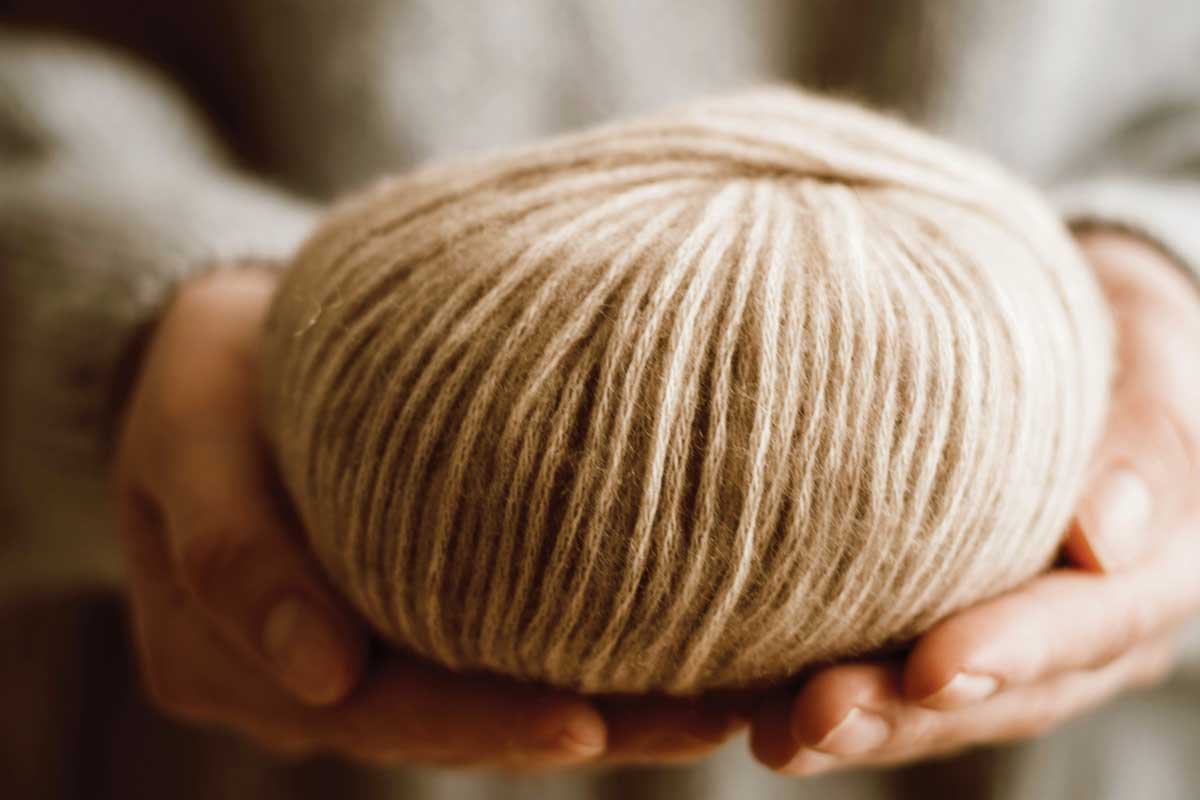
The craft of spinning wool into fibers suitable for weaving has roots in antiquity, transcending civilizations over thousands of years. This is hardly surprising considering wool’s remarkable properties. It not only provides insulation and breathability but also manages moisture, resists flames, and maintains its form. Additionally, wool boasts durability, versatility in dyeing, eco-friendliness, and comes in an array of textures and natural hues.
Coloring wool
Maddy Purves-Smith, the manager and co-owner of Custom Woolen Mills (CWM, customwoolenmills.com) located near Carstairs, Alberta, fervently supports natural fibers and “slow fashion.” Her family-operated enterprise employs vintage machinery to transform fiber into diverse products, including carded/unspun wool, various yarns, bedding, and knitted creations.
Though their production is significantly lower than modern industrial mills, CWM takes pride in their environmentally sustainable practices and the capacity to tailor orders to individual preferences. They also value the myriad natural shades of fleece from sheep, alpaca, and other animal fibers, rather than merely selecting for white fleece, which larger mills often devalue.
Conversely, much of the uniformly white fiber sought after is treated with dyes and chemicals that present substantial risks to ecosystems and human health. CWM’s limited selection of dyed yarns is, however, hand-dyed using the vibrant colors derived from local flora.
The sustainable alpaca
While sheep’s wool dominates the shelves of yarn stores, Edward Pickering and Shauna Seabrook of Chetwyn Farms (chetwynfarms.com) in Hillier, Ontario, have committed themselves to the world of alpacas.
Not only does alpaca yarn possess appealing properties—being softer and warmer relative to its weight compared to sheep’s wool—but the sociable and eco-friendly nature of these animals also attracted Pickering and Seabrook to their farming and yarn production venture.
As alpacas naturally thrive in mountainous regions, Pickering emphasizes that they do not require lush pastures and can comfortably graze on less fertile lands. An interesting fact is that they lack upper teeth, making them gentler on pasture compared to other grazing animals.
“They don’t pull up the grass; they merely graze!” Pickering quips. An added environmental benefit is that these animals prefer to use a single, communal area for their waste, producing manageable pellets that can be directly utilized as fertilizer.
A complex tapestry
Like all activities that alter the natural world for human use, textile production is intricate and multifaceted. There is considerable potential for further exploration regarding the global necessity for regenerative farming practices, along with the contributions of newer synthetic fibers made from recycled resources or employing closed-loop manufacturing methods.
Similar to our dietary choices, making informed decisions about textiles can be challenging. However, we would do well to follow Purves-Smith’s counsel to “explore the origins of our textiles” and to factor in the welfare of the individuals, animals, and ecosystems involved in our fabric selections.
This article originally appeared in the December 2024 edition of up7op magazine.