
The reality is difficult to confront, yet it remains evident that significant inequalities between men and women endure. It’s hard to tune in to current events without feeling disheartened by setbacks regarding women’s choices, threats to their personal and sexual safety, and ongoing economic challenges.
These gender inequalities are primarily driven by those in positions of power. Despite some advancements, women account for only 28% of the U.S. Senate. At the state legislature level, the figures are slightly better, with women holding 29.9% of state senate seats and 33.7% of state house seats.
Unsurprisingly, the effort to close the wage gap has stagnated, with women earning only 82 cents for every dollar earned by men—a statistic that has remained relatively unchanged for the past twenty years.
Clearly, action is needed. Although it’s easy to feel disillusioned, it is imperative that advocates for women’s rights take a stand during this critical time.
Women in the Workplace
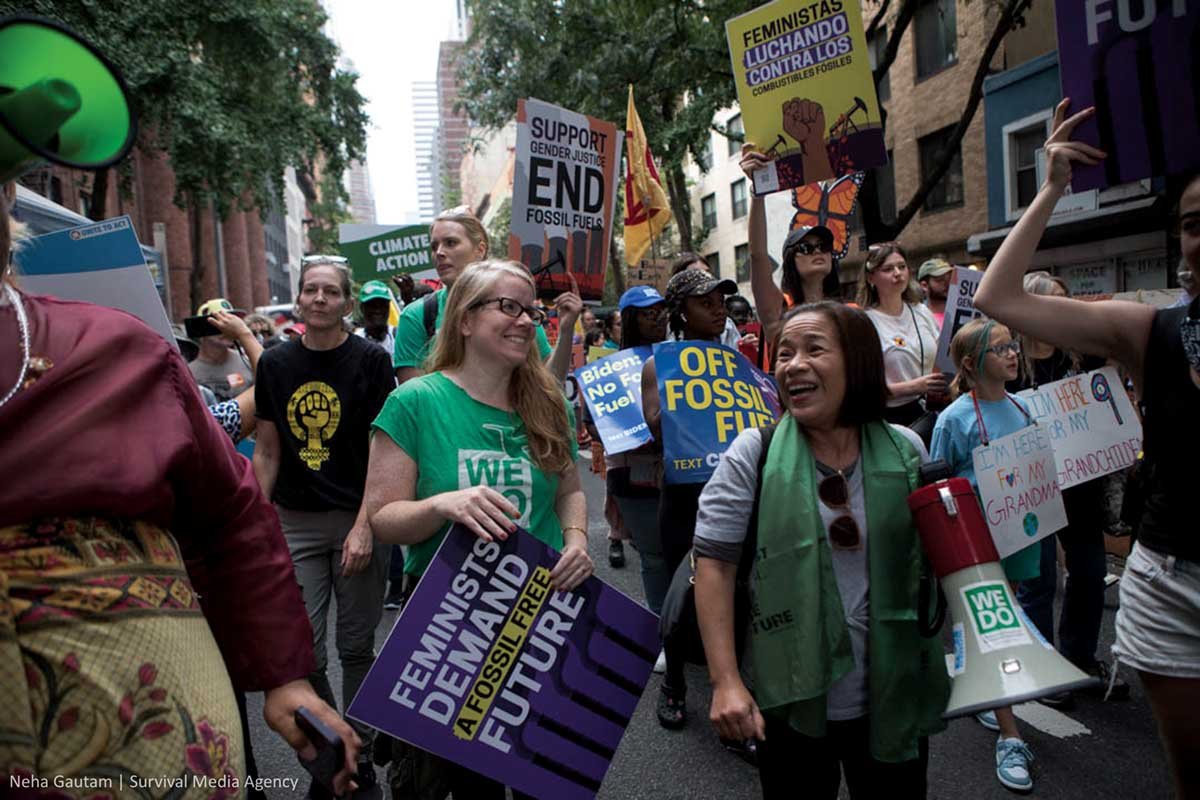
In the complex and often daunting arena of women’s rights advocacy, WEDO is stepping up to the forefront. Established in 1991 by activists Bella Abzug and Mim Kelber, WEDO has carved out a path as a leading global advocacy organization for women’s rights for over three decades.
WEDO works to promote women’s rights and gender equality, advocate for environmental protections, and incorporate feminist viewpoints on climate justice through various activities such as conferences, actions, fundraising, knowledge development, and outreach.
“Our approach is about redistributing power, funds, and perspectives,” explains Executive Director Bridget Burns. “We aim to broaden the representation of voices in these spaces, as we believe that by changing representation, we can influence policy.”
WEDO’s advocacy efforts revolve around four central tenets—Advocacy and Influence, Capacity Building and Training, Knowledge Production and Outreach, and Resource Distribution. This multifaceted approach involves shaping how resources are allocated; elevating and disseminating feminist viewpoints on global concerns; and supporting underrepresented voices and solutions.
WEDO’s mission emphasizes the interconnectedness of economic independence, climate change, sexual health, and the safety of women. “We recognize that issues are not isolated; they’re all interconnected,” Burns states. “In discussions about climate justice, we are also addressing gender justice. Our goal is to bring grassroots feminists from various regions together to highlight their shared challenges.”
Advocating for Mother Earth
Among WEDO’s critical endeavors is addressing the severe existential threat posed by climate change. By promoting feminist perspectives, they aim to cultivate innovative ideas and knowledge that could provide transformative solutions for environmental challenges.
Evidence suggests that women may have an advantage in climate advocacy, particularly concerning local matters. A study revealed that “women consistently have a stronger perception of the risks posed by global warming to their well-being.”
Yet, the backing and financing for women’s climate initiatives remain severely underfunded. A report from the Generation Equality Action Coalition on Feminist Action for Climate Justice indicated that only 3% of philanthropic funds directed toward environmental causes support women’s environmental activism. Moreover, women face significant barriers in the scientific community related not only to gender but also to race, nationality, language proficiency, and field of study.
WEDO is also dedicated to amplifying the knowledge and insights of Indigenous women, who are often the first victims of climate injustice. “We have found that Indigenous knowledge, being informed by a feminist perspective, offers living practices that align more harmoniously with the planet,” Burns emphasizes.
This is further substantiated by a UN report suggesting that “Indigenous Peoples must play a leading role in the global response to climate change to preserve biodiversity effectively, especially Indigenous women, who are crucial as stewards of natural resources.”
However, Indigenous women frequently find it challenging to secure their rightful place in these discussions. At the recent UN Framework Convention on Climate Change (COP28) in 2023, women constituted only 34% of delegates, reflecting a meager 3% increase since 2008.
Make Your Voice Heard
WEDO believes that Indigenous women and all women with valuable contributions to this cause should have a platform. For the past decade, they have operated the Women Delegates Fund, which has empowered over 200 women from climate-vulnerable nations to voice their concerns at climate negotiations, such as COP28.
A vital part of their strategy involves ensuring women access the right platforms and providing training to navigate spaces historically closed to them and other marginalized groups. “It’s not merely about bringing participants to an event,” Burns clarifies. “We offer substantial training, capacity-building, and support for individuals to understand how to utilize these platforms effectively.”
Moving Forward Together
WEDO envisions not just solutions for climate issues and gender equity but strives to ensure that these solutions are just. “We actively advocate to ensure that we do not transition from one economy predicated on unpaid labor and deeply unequal gendered labor markets to another renewable economy that perpetuates these same injustices,” declares Burns.
Burns emphasizes the communal strength in activism; it brings about significant change rather than just minor improvements. “Powerful movements are essential for building resilience, and that’s the essence of our collective advocacy,” she mentions.
As WEDO advances its mission, prioritizing the fight against fossil fuels, promoting innovative solutions from women in marginalized communities, combatting corporate excess, and pushing for systemic reform across decision-making processes, Burns holds a hopeful outlook for the future. She approaches her mission with determination, savoring each incremental victory. “We are engaged in a hopeful political movement,” she concludes.