
Dan McNeill, known as Gwiisihlgaa, gears up in his diving suit, grabs a two-foot rake, and prepares his catch bag before plunging into the waters surrounding Haida Gwaii, a cluster of islands off the northern coast of British Columbia. He’s on a mission to find urchins, using his metal tool to gather these spiny marine creatures into his bag.
This diving routine plays a crucial role in McNeill’s responsibilities as the marine stewardship director for the Council of the Haida Nation, contributing significantly to the conservation efforts for the region’s declining kelp populations.
“It serves as nourishment for us,” he shares regarding the vital brown algae seaweed. “It’s woven into our culture and identity.”
Nurturing seafood to flourish
The diving activities undertaken by McNeill are part of the “Chiix̱uu Tll iinasdll: Nurturing Seafood to Grow” initiative, which focuses on revitalizing a kelp forest region in Gwaii Haanas from 2017 to 2021.
By collecting urchins, he aims to correct a disrupted food chain. Historically, sea otters were key predators of urchins until their local extinction during the maritime fur trade in the 18th and 19th centuries.
In their absence, urchin populations exploded, resulting in excessive kelp grazing, which poses a significant cultural resource challenge for the Haida Nation and threatens global biodiversity and environmental stability.
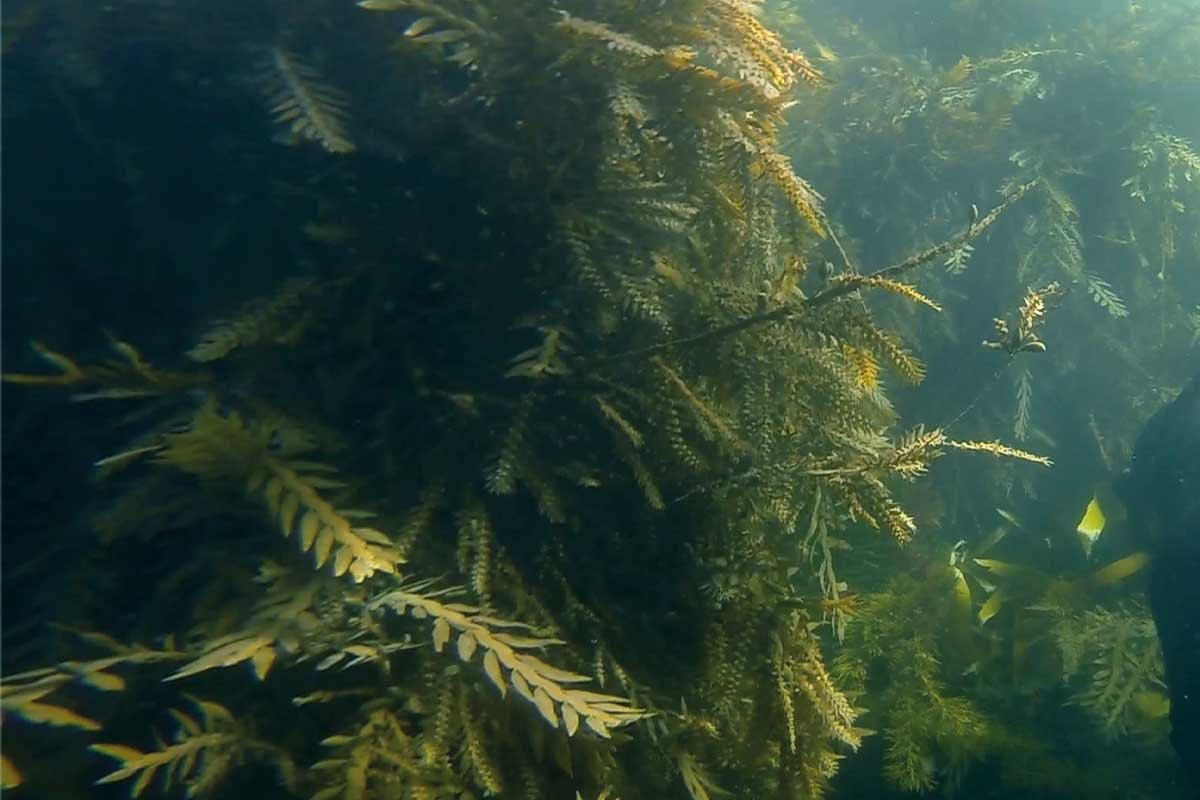
Kelp, found along coastlines worldwide, sustains and shelters vital marine life. Like terrestrial forests, kelp forests absorb carbon dioxide, nitrogen, and phosphorus through photosynthesis, releasing oxygen, which is crucial in combating climate change. The ecosystem services they provide contribute over $500 billion annually to fisheries and nitrogen removal efforts globally.
The Haida Nation is not alone in facing challenges related to kelp loss. Over the last 50 years, kelp forests globally have suffered a decline of more than 50%, putting coastal biodiversity, water quality, and atmospheric carbon levels at risk.
A pressing conservation concern
Underwater ecosystems are vanishing at alarming rates due to a variety of issues including habitat destruction, overharvesting, pollution, and climate change, along with sedimentation from agricultural runoff, deforestation, dredging, and extreme weather events. Despite the longstanding emphasis on ocean conservation, the focus on preserving and restoring kelp forests remains an emerging field.
“The ocean often receives less attention than land conservation efforts, and within marine environments, coral reefs receive the majority of focus,” clarifies Aaron Eger. “There are multiple biases influencing the allocation of conservation funding and efforts.”
This lack of representation was highlighted in a 2021 study published in the journal Frontiers in Marine Science, which quantified the minimal mentions of kelp forests in global environmental governance compared to seagrass meadows, salt marshes, coral reefs, and mangroves.
A worldwide call to action
In 2023, the Kelp Forest Challenge was initiated by Eger’s organization, aiming to mobilize individuals, businesses, and governments to commit to restoring 1 million hectares and safeguarding 3 million hectares of kelp forest by the year 2040.
The path to reviving and protecting kelp habitats begins with understanding the causes of their decline. Efforts such as managing urchin populations, cleaning polluted waters, and mitigating sedimentation can conserve struggling kelp, while reseeding or transplanting juvenile kelp can promote the establishment of new forests.
“Although it’s still in its early stages, I believe we are making progress,” Eger states regarding the pledges that can be monitored through a dashboard the organization created for public engagement. “Increased international collaboration and a more unified approach to restoration will be key.”
While nations such as Japan and Korea have long histories of restoration initiatives, and areas like California and Washington are developing conservation strategies, the Kelp Forest Challenge stands as the first international conservation effort of its kind.
An intertwined ecosystem
In Haida Gwaii, the ethos of the Haida Nation emphasizes their interconnected values. The concept of Gina ‘waadluxan gud ad kwaagid—interconnectedness—serves as a profound reminder of the delicate and interdependent nature of the biosphere. McNeill emphasizes this principle while discussing the region’s kelp decline.
“The sea otter has been pivotal in regulating urchin populations, and their absence changes the entire ecosystem’s dynamics,” McNeill observes. “This clearly illustrates the interdependence of our ecological system.”
This article originally appeared in the April 2025 issue of up7op magazine.