
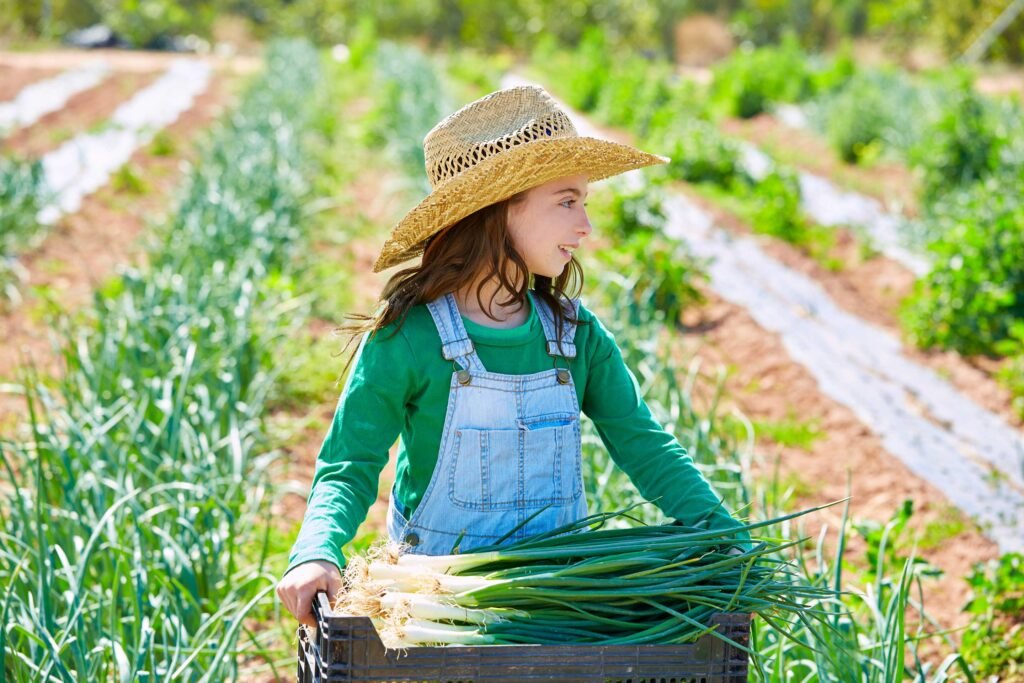

If you enjoyed a meal today, you owe a debt of gratitude to the farmers of Canada. Regrettably, the agricultural sector is facing significant challenges as the older generation of farmers retires. Furthermore, experts are sounding the alarm about the rising disconnection from the origins of our food, which contributes to unhealthy eating habits and obesity rates. Fortunately, numerous organizations are striving to address this issue, particularly with a focus on engaging children.
The Grass is Greener Somewhere Else
The majority of farmers in British Columbia are in their sixties, with less than 5% under the age of 35. This trend is echoed in other provinces across Canada, where an increasing number of farmers are entering retirement and a declining number of young individuals are assuming these roles.
This demographic shift often results in farmland being repurposed for residential developments or consolidated into large corporate agricultural enterprises. Industry experts in Europe, Asia, and the United States report that these changes increase food insecurity, reduce biodiversity, and decrease the availability of local products. Corporate farms are more likely to import supplies and distribute their goods far beyond the local community.
Encouraging children to engage in community gardening and farming initiatives can bolster local agriculture while imparting valuable health benefits to the participants. Across the nation, community organizations dedicated to this cause are emerging.
Seeds of Innovation
Fresh Roots, a nonprofit based in Vancouver, is dedicated to promoting ecological responsibility. It emphasizes that access to nutritious land and fresh food is crucial for the health of communities.
In addressing the issue of aging farmers, director Marc Schutzbank likens it to mastering a challenging classical music piece. “An accomplished pianist may rehearse countless times for a performance,” he remarks. “Conversely, a farmer in Canada may only have the opportunity to cultivate a crop around 60 times in their lifetime.”
“This makes the knowledge passed down from farmer to farmer incredibly valuable,” Schutzbank elaborates. “Understanding soil dynamics and the particular characteristics of a given piece of land is essential. We must consider how to ensure that this invaluable knowledge—rooted in the very essence of these farmers—continues to be shared.”
Fresh Roots prioritizes educating youth about the significance of Canadian agriculture by illustrating the narrative of our food’s origins. “Our mission is to encourage urban dwellers to recognize the importance of supporting our local farmers,” Schutzbank expresses.
By failing to establish this relationship and facilitate the transfer of knowledge between generations, we risk severing the vital link that connects experienced farmers to their successors. “Without this knowledge, it’s akin to disconnecting a pianist’s ability to perform,” Schutzbank warns. “We will lack the expertise to play our part effectively.”
A Revolutionary Educational Approach
In 2010, Fresh Roots established its inaugural edible schoolyard at an elementary school. A few years later, it collaborated with the Vancouver School Board to launch Schoolyard Market Gardens.
These gardens were the first of their kind in Canada, serving as outdoor classrooms. Instead of traditional desks, students immerse themselves in soil, learning about farming, cooking, and the benefits of consuming local produce. They are inspired by workers and volunteers who emphasize the importance of sustainable, healthy eating.
“Our crops primarily consist of kale and broccoli,” Schutzbank chuckles. “Research indicates that when students participate in gardening, they increase their vegetable consumption because they become acquainted with what they grow. Our role at Fresh Roots—and similar organizations—is to remind them that healthy eating isn’t difficult.”
Health-Boosting Initiatives
Over the past thirty years, childhood obesity rates in Canada have surged by 300%. Many of these children are unlikely to outgrow this weight gain, which can lead to self-esteem challenges, heightened risks of chronic illnesses such as diabetes and hypertension, and even hindered academic performance.
Multiple elements contribute to children’s health, nutrition, and weight challenges. Sometimes it’s a deficiency in food education, while at other times it stems from food insecurity, limited access to healthy options, or an insufficient connection to gardens and farms that fosters a genuine appreciation for nutritious food.
Organizations like Fresh Roots play a pivotal role at this intersection. “Many individuals have lost their connection to our food systems,” Schutzbank explains. “As a result, they often make poor dietary choices, adversely affecting both their physical and mental well-being.”
The Public Health Agency of Canada supports this idea, recognizing that children who engage in gardening activities exhibit better health. In its recommendations for addressing childhood health and obesity challenges, the agency advocates for enhanced community capacities for local food production and community gardens, allowing more children to engage with agriculture. Fresh Roots and similar initiatives have witnessed firsthand how their programs positively influence children’s food choices, including a greater interest in vegetables.
“We simply need to establish a connection with our vegetables,” Schutzbank asserts. “At one elementary school, we had two young boys in grade 3 who never tasted broccoli. By the end of the year, they were playfully arguing over who would get to eat the purple broccoli.”
Alongside partnering with schools, Fresh Roots also operates a summer program where young people work on various farms, preparing healthy food for themselves and the community. “Some of these students have never had vegetables regularly available at home,” Schutzbank shares. “They lack the experience of taking charge of their diets and general well-being.”
Last summer, one student discovered a passion for local zucchini and began crafting zucchini fritters and pasta dishes to incorporate the vegetable into her meals.
A Sustainable Future
The benefits extend beyond the schools and children involved. The vegetables grown in Fresh Roots’s schoolyard gardens are frequently featured in restaurants throughout British Columbia and beyond.
“It’s easy to overlook that farmers sell not just the produce you find in grocery stores,” Schutzbank notes. He highlights local jams and similar products that utilize Canadian ingredients. “A significant portion of goods contributes to the secondary cottage industry. How can we rejuvenate our food systems and all their components? It starts with supporting our farmers.”
Adopting a comprehensive approach, Fresh Roots fosters the creation of green jobs, underscores the importance of local food security, enhances community well-being, and enriches school curricula for students. In the long term, nurturing experiential learning may help reshape the aging landscape of Canadian agriculture by exposing more youth to the realities of food cultivation.
Nurturing Tomorrow’s Green Thumb
As we uncover the myriad advantages of introducing children—and ourselves—to gardening and the cultivation of fresh produce, more individuals are motivated to participate. “The first step is to go outside and plant a seed,” Schutzbank encourages. “Engage in your own food journey and see where it takes you.”
If that ignites a passion within you, Schutzbank suggests connecting with one of the many like-minded organizations across Canada looking for volunteers, donations, and other forms of support.
Lastly, prioritize buying local. “When shopping, consider choosing to support your local farmers,” Schutzbank advises. None of this is feasible without the contributions of Canadian agriculturalists. Look for labels indicating locally sourced goods and frequent farmers’ markets.
“Let’s cultivate quality food for everyone,” Schutzbank asserts. “That’s the paramount message.”