
“Do not allow the fast-paced demands of the world to deprive your children of tranquility. An unending flow of stimuli without the balance of stillness leads to disorder.” —The Parent’s Tao Te Ching
At any of the numerous children’s yoga studios emerging in fashionable urban areas, instructors often invite kids to engage in activities like, “Let’s try our tree pose. Imagine your roots growing deeply into the earth, feeling steady and strong like a tree as you balance on one leg.”
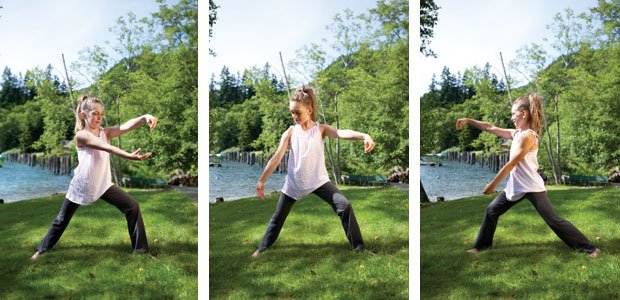
Later, they might encourage the little ones to transform into an angry cat, a barking dog, a graceful cobra, or a valiant warrior. In tai chi sessions, children are prompted to envision their breath as a bubble between their hands, expanding and contracting in time with their movements.
Imagination: the pathway to inner tranquility
The charm of mind-body exercises for children lies in their ability to engage the boundless imagination that kids possess. Not only do these activities allow children to connect their mental imagery with physical movements, but they also offer a playful experience devoid of the pressures of competition or comparison with others.
This understanding, along with a focus on breath and bodily awareness, creates a serene atmosphere that children often seek after a chaotic day. In truth, all mind-body practices impart lessons in self-regulation through intentional, slow movements that soothe the mind while challenging the body.
Academic success through sun salutations
Anticipation for the school year doesn’t always inspire a peaceful state of mind in children as the summer break wanes. As September approaches, children need to readjust to regular sleep schedules, the rigors of schoolwork, and structured after-school activities.
As caring parents, we strive to help our children achieve academic success. However, many kids find studying to be quite daunting, often requiring continual support with their homework and frequent reminders to remain seated and focused.
Engaging in mind-body exercises can lead to enhanced concentration and cognitive performance during academic pursuits. A children’s yoga instructor notes that these exercises teach children the true essence of stillness and focus.
Instead of merely being told to be still, children experience and understand what it means to control their movements through mindfulness. Mind-body activities can promote relaxation, improve sleep quality, enhance attention spans, and provide a calming, enjoyable non-competitive environment.
Yoga proves particularly beneficial for children facing hyperactivity, attention deficits, or challenges with patience and concentration. Regular participation can significantly improve their focus and ability to engage in tasks without becoming easily distracted.
Parents and educators often observe increased academic performance and better behavior in the classroom. Most importantly, children gain self-discipline and confidence—skills they carry throughout their lives.
Research corroborates the positive impact of yoga and similar mindfulness practices on educational outcomes. A 2009 study in China revealed that students engaging in yoga not only fared better academically but also excelled in individual subjects, unlike those who didn’t partake in mind-body activities. These findings are consistent with prior studies indicating that meditation, when practiced over extended durations, can result in substantial improvements in perception, attention, and cognitive abilities.
Further research demonstrates that yoga techniques effectively manage anxiety and enhance focus. Studies also highlight that practicing yoga improves academic achievement and facilitates problem-solving capabilities in children.
Benefits for physical and metabolic health
Participating in mind-body practices fosters a deeper awareness of personal physical abilities in children. Each child may begin their journey from a unique starting point, but consistency in practice can lead to greater strength, improved balance and coordination, and enhanced overall fitness. Though inherently flexible, children need to focus on proper body alignment and coordinated movements to truly harness their flexibility.
Following moments of triumph in mastering a challenging pose, children of all ages often develop a keen interest in mind-body exercises, leading to improvements in strength, endurance, agility, balance, coordination, and cardiovascular fitness.
While these practices emphasize meditation, they are highly active. Certain yoga styles or tai chi movements, such as kung fu, can burn as many calories as more intense sports like soccer. However, unlike traditional children’s sports, mind-body exercises are gentle on the body and prioritize alignment to avoid injuries.
For instance, during a balancing exercise in yoga like “toppling tree,” children learn to move with control and grace, enhancing their core stability while strengthening major muscle groups and boosting their metabolism.
Recent studies suggest that mind-body practices like yoga can lead to lower blood pressure, heart rates, and respiratory rates among children and young adults. The yoga corpse pose, or savasana, has been shown to lower blood pressure in young women when practiced consistently over a 12-week period.
More vigorous mind-body exercises, such as kung fu, may yield significant health benefits, including increased muscle mass and better blood sugar management, especially for children struggling with weight issues.
After-school “om”-time
The 2011 Active Healthy Kids Report Card from Health Canada indicates that only 8 percent of children engage in moderate to vigorous physical activity during after-school hours.
According to parents, a staggering 73 percent of children spend their time watching television, reading, or playing video games instead of engaging in outdoor activities, sports, chores, or homework. A primary obstacle is the lack of access to supervised after-school programs that prioritize physical activity.
If attending a children’s yoga class is not feasible, there are various instructional CDs and DVDs designed for kids that can be used at home. Older children can independently explore these resources, while younger ones will delight in “play time” mimicking animals with their parents.
Take a few moments after your hectic day to practice some of these poses with your child.
|
|
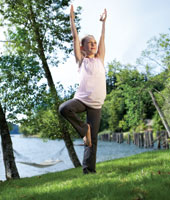 Tree Pose (yoga)
|
|
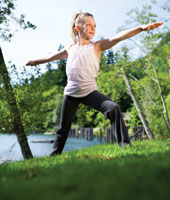 Peace Warrior (yoga)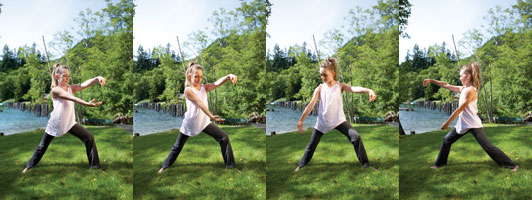
Snake Creeps Down (tai chi)
- The objective in this tai chi posture is to maintain fluidity while shifting your weight predominantly onto the creeping leg.
- Your back hand should shape into a bird’s beak (with four fingers to the thumb), and ensure your joints remain fluid, never locked; the extended leg should stay slightly bent.
- Explain to children that a snake must always be poised to rise or slither away at a moment’s notice.