
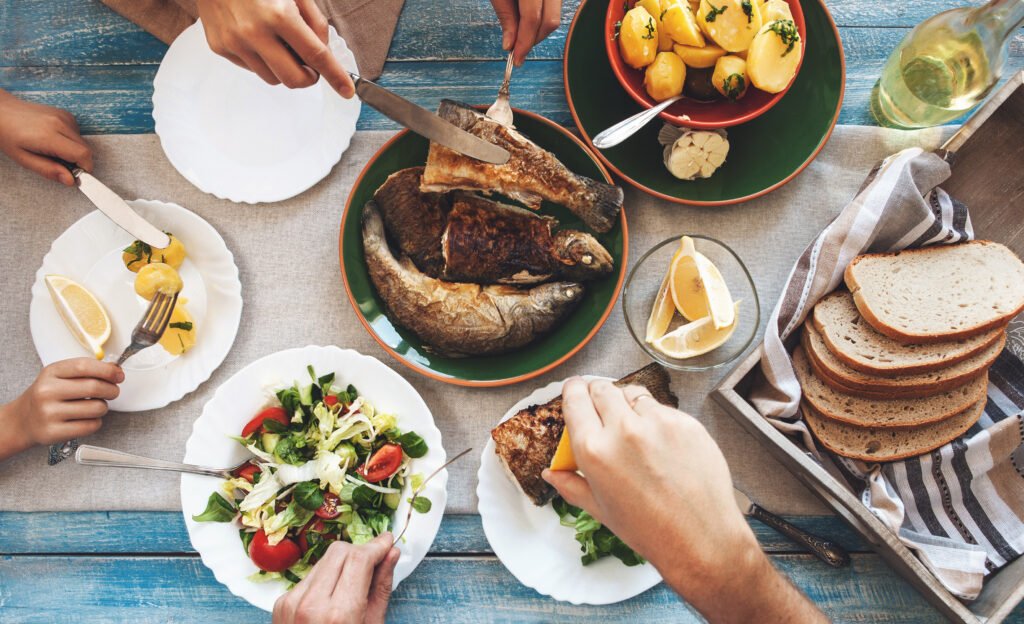

1. Reduce Stress and Enhance Workplace Happiness
Balancing work commitments, managing children, shopping for groceries, and preparing dinner can become an overwhelming task. However, research indicates that shared family meals can help alleviate stress. Teens who regularly gather for family dinners report lower stress levels, while working parents, especially mothers, tend to feel more satisfied with their job environments when they can attend family dinners, even after long professional hours.
2. Likely to Reduce Your Caloric Intake
Eating out often means consuming meals that are excessively large. Dishes served at restaurants can contain up to 60% more calories than home-cooked alternatives. Moreover, the dining environment itself has unexpected effects on food consumption. A study highlights that individuals dining in a fast-food-like atmosphere (characterized by bright lighting and upbeat music) tend to consume more calories compared to those in relaxed settings with dim lighting and ambient music—an ambiance easily replicated at home.
3. You Can Save Time
This might seem unexpected, but consider this: opting for a healthy sit-down restaurant meal can consume around 80 minutes from departure to return home. In contrast, preparing dinner at home can usually be accomplished in under 30 minutes, with an additional 15 minutes to enjoy the meal. (Don’t take our word for it—check out these quick, one-pan recipes for meals that can be prepared in half an hour.)
4. Your Children May Develop Healthier Eating Habits
A family dinner doesn’t need to resemble a picturesque Norman Rockwell scene. The key is regularity. Research indicates that kids who share three or more family meals each week are:
- 12% less likely to be overweight
- 35% less likely to encounter eating disorders
- 24% more inclined to consume nutritious foods
Conversely, children who gather for fewer than three family meals weekly are:
- Five times more likely to abuse prescription medication and use illegal drugs
- Five times more likely to smoke
- Five times more likely to experiment with alcohol
So, what’s cooking for dinner?