
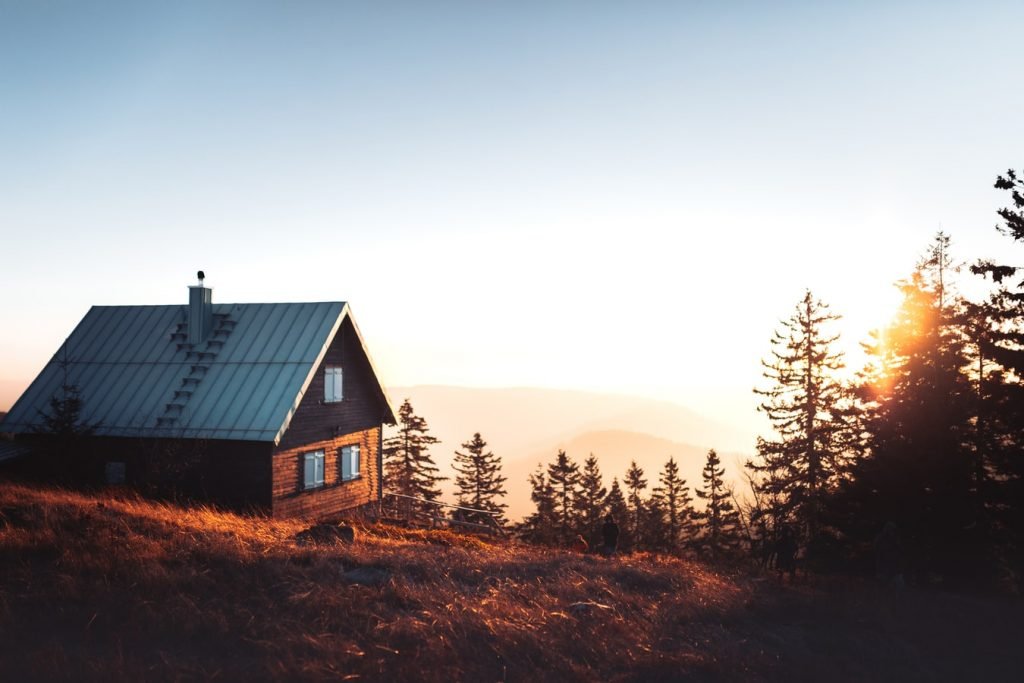

For ages, human beings have depended on various types of shelters for protection, comfort, and social connection. However, in recent years, the trend towards constructing larger homes at a rapid pace has significantly harmed the environment. If you are contemplating the construction or renovation of your residence, it’s worth exploring eco-friendly materials and energy sources.
“Your home is like a canvas,” remarks Arno Keinonen, who, after years of working as a marine engineer in the Arctic, opted to settle down by creating a carbon-negative dwelling in East Sooke, BC. His residence, composed of hemp and lime blocks, is an impressive example of sustainable architecture, overlooking a breathtaking sea and sky panorama from its cliffside location.
Keinonen recounts his experience, saying, “People labeled me as insane initially,” reflecting on the early phases of his project. Undeterred, he and his wife now inhabit a self-sufficient home that actively removes carbon from the air and harnesses solar energy. Additionally, they utilize rainwater and greywater systems, maintain a year-round greenhouse for food production, and contribute surplus energy back to the power grid.
“We named it the ‘Harmless Home,’ not because it’s entirely without impact, which is not possible for any building, but because it minimizes harm significantly,” Keinonen explains.
The unseen price of building
The construction sector heavily impacts the environment. A significant portion of construction waste ends up in landfills, even though approximately 75% could be repurposed or recycled. Notably, over 25% of the waste in Canadian landfills is attributable to construction activities. Additionally, buildings account for about 25% of the country’s total energy consumption.
Understanding green building
Green building focuses on constructing structures that have a reduced environmental impact and that are easier to maintain. This approach is applicable throughout a building’s life cycle, encompassing site selection, design, construction, operation, upkeep, renovation, and demolition.
This can include choosing building sites that are already developed and accessible via public transit, opting for sustainable materials like recycled wood, and working to minimize construction waste. Additionally, it often involves employing advanced energy and water management systems and selecting non-toxic materials for flooring, furnishings, and paints.
“A dwelling should harmonize with nature instead of imposing on it,” states Ryan Elliot, the founder of Cast Sustainable Construction, a business specializing in eco-friendly renovations and constructions in North Vancouver.
Elliot advocates for embracing Indigenous philosophies, promoting a stewardship mentality over ownership concerning land. “Our construction methods should reflect the way in which humans can coexist harmoniously with nature,” he asserts.
Advantages of green construction
Switching to eco-friendly building practices offers numerous advantages without necessarily incurring exorbitant costs.
According to Cathy Finley, a farmer who constructed and resides in a hemp house in Langley, BC, her home only cost about 10% more than a conventional structure—a modest increase considering the long-term savings on utilities and upkeep. She emphasizes the value of the experience itself.
“At our construction site, it was just a team of folks with buckets,” she recalls. “We avoided toxic concrete mixtures and handled the hemp ourselves.”
Even with a hands-on approach, Finley notes that her home’s contemporary design challenged many preconceived notions about “eco” housing.
“Initially, visitors arrived decked out in layers upon layers of clothing,” she jokes. “They expected it would be frigid!”
To their surprise, her house remained warm during winter, and in summer, the hemp walls kept it cool enough that the refrigerator didn’t need to be powered to keep food fresh.
The future landscape of green construction
“As more individuals choose to build sustainably, the costs will decrease over time,” asserts Keinonen. “We must set an example to demonstrate the demand for eco-friendly materials and practices.”
Both Keinonen and Finley highlight the necessity of conducting informed discussions about green building to reach a broader audience. Moreover, Finley expresses the need for increased governmental support, potentially through subsidies, to advance these initiatives.
“We require leadership that makes it feasible to pursue sustainable building,” she argues. “A greater commitment to innovation and understanding is essential.”
Elliot expresses concern that reliance on governmental and industry support for promoting green building could hinder substantial change. He envisions a future where innovation flourishes at a grassroots level, with diverse individuals devising groundbreaking solutions to coexist with the earth.
“We are just one component of a larger system,” he reflects.