
By Sandi Schwartz | Contributor
Looking to truly brighten your children’s lives? Instill in them the value of giving to others. Contrary to the common belief that children crave more “stuff” for happiness, research indicates that the act of giving enhances happiness and can also improve their health and overall quality of life.
Children Are Innately Generous
Surprisingly, children come into this world with an inherent tendency to show compassion toward others. Researchers at the Max Planck Institute found that even infants demonstrate helpfulness before they can comprehend the concepts of kindness and etiquette. These young ones act out of their own desire, rather than for any expected reward.
In fact, humans have developed an evolutionary trend toward compassion, and our brains are conditioned to react to those in distress. Kindness has evolved into a trait crucial for our survival. Charles Darwin suggested that “communities with the most sympathetic individuals would thrive best and raise the most offspring.” This highlights that the more we support one another, the more prosperous our society becomes.
But do children retain their compassion as they mature? A groundbreaking study conducted by psychologists at the University of British Columbia revealed that young children experience a greater sense of happiness when giving rather than receiving. In experiments, toddlers who were prompted to share their own treats exhibited higher levels of joy when they gave to others. The findings suggest that engaging in pro-social activities, like volunteering and donating to the needy, enhances our overall happiness.
Children possess a natural inclination toward kindness, but it’s our responsibility as parents to nurture this quality as they develop. If neglected, negative experiences can unfortunately diminish this beautiful instinct.
By providing our children with opportunities to give, they will be happier and healthier and have the power to pass along that goodness to so many people.
Transformative Effects of Giving on Children
<pExtensive research has highlighted several positive impacts of giving on children's lives.
Enhances Happiness
When we bring joy to others through gifts or support, we experience a physiological effect known as a helper’s high. This euphoric feeling arises from our brains releasing endorphins, similar to the rush experienced from physical exercise. According to Psychology Today, this helper’s high is akin to a natural “high,” filling us with elation and excitement.
Boosts Health
Studies demonstrate that giving can lead to improved health. In his book, Why Good Things Happen to Good People, Stephen Post, a preventative medicine professor at Stony Brook University, notes that helping others has been linked to health improvements in those with chronic conditions. A 1999 study by Doug Oman at the University of California, Berkeley, indicated that giving may enhance physical health by reducing stress. Additionally, a 2006 joint study from Johns Hopkins University and the University of Tennessee found that individuals who assist others had lower blood pressure compared to those who did not.
Fosters Social Connections
Numerous studies suggest that acts of giving often lead to reciprocal generosity from others. These positive actions nurture trust and cooperation, ultimately strengthening our relationships. We also develop bonds with those we help, which is vital since positive social interactions are key to good mental and physical health.
Instills an Attitude of Gratitude
Giving assistance to those in need fosters gratitude, as it offers a fresh perspective on life. Volunteering provides children with chances to reflect on their own lives and appreciate what they possess while introducing them to a broader world. Moreover, gratitude is a critical element for achieving happiness and good health.
Enables Children to Inspire Others
Those who receive kindness often feel compelled to pass it on. Researcher James Fowler at the University of California, San Diego, discovered that a single act of kindness can inspire multiple subsequent acts of kindness. In this way, children can serve as mentors, sparking a ripple effect of kindness and compassion.
Effective Ways to Teach Children About Kindness
Teaching children the value of giving back is simpler than you might think. There are countless opportunities for family volunteering experiences that offer children meaningful involvement while also positively impacting those they assist. Here are some strategies for integrating giving into your children’s lives.
Talk about ways they can help. Carve out a few moments in your day to engage your children in a conversation about who they’d like to assist. Present options like babies, animals, individuals without homes, children without families, those needing books, or the elderly. Discuss various projects you can undertake together to support those in need. For extra motivation, read books on kindness and giving to your children.
Discuss the significance of charitable donations. If you decide to organize a monetary collection for charity, consider creating or purchasing donation boxes for each child. Encourage them to set goals for how much they want to contribute over the year and identify which organizations they want to support. Regularly check in, either weekly or monthly, to track their progress toward their goals.
Help your children discover their passions. Our interests should guide our philanthropic efforts because enthusiasm enhances our commitment. When we care about our projects, we derive more satisfaction from them. Aid your children in recognizing their talents, skills, and interests that they can leverage for good.
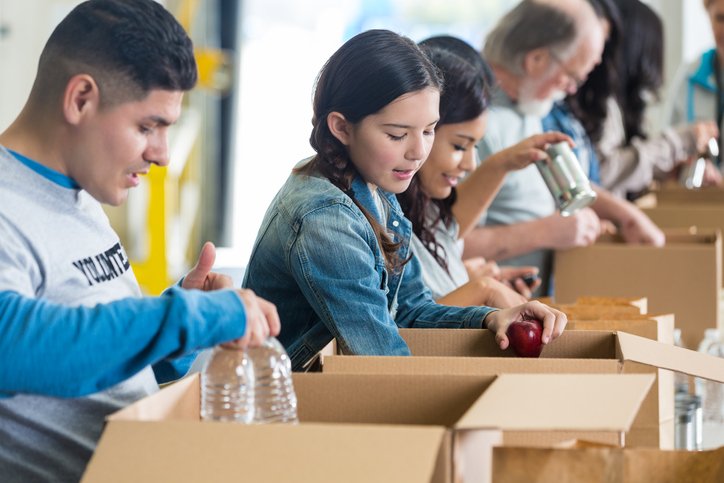
Engage as a group. Participating in community service activities with others amplifies the joy of giving as it also fosters social connections.
Select local projects. Contributing to local causes where you can see the results has a more significant impact. Research has shown that people are generally happier when they donate to charities connected to friends or family rather than making anonymous donations to distant causes.
Find family volunteering opportunities. Volunteering together as a family prioritizes giving and helps infuse it into daily routines. There are countless ways to give as a family, and if you don’t find an appealing option, feel free to create one. You can explore local government websites, seek out nearby charities, ask friends and neighbors, or visit platforms like Idealist, VolunteerMatch, and JustServe.
Opportunities to help others abound. The next time your child’s room seems overwhelmed with items, suggest they gather some to donate to children in need. By offering your children chances to give, they will become happier, healthier individuals and possess the ability to spread positivity to many others.


